
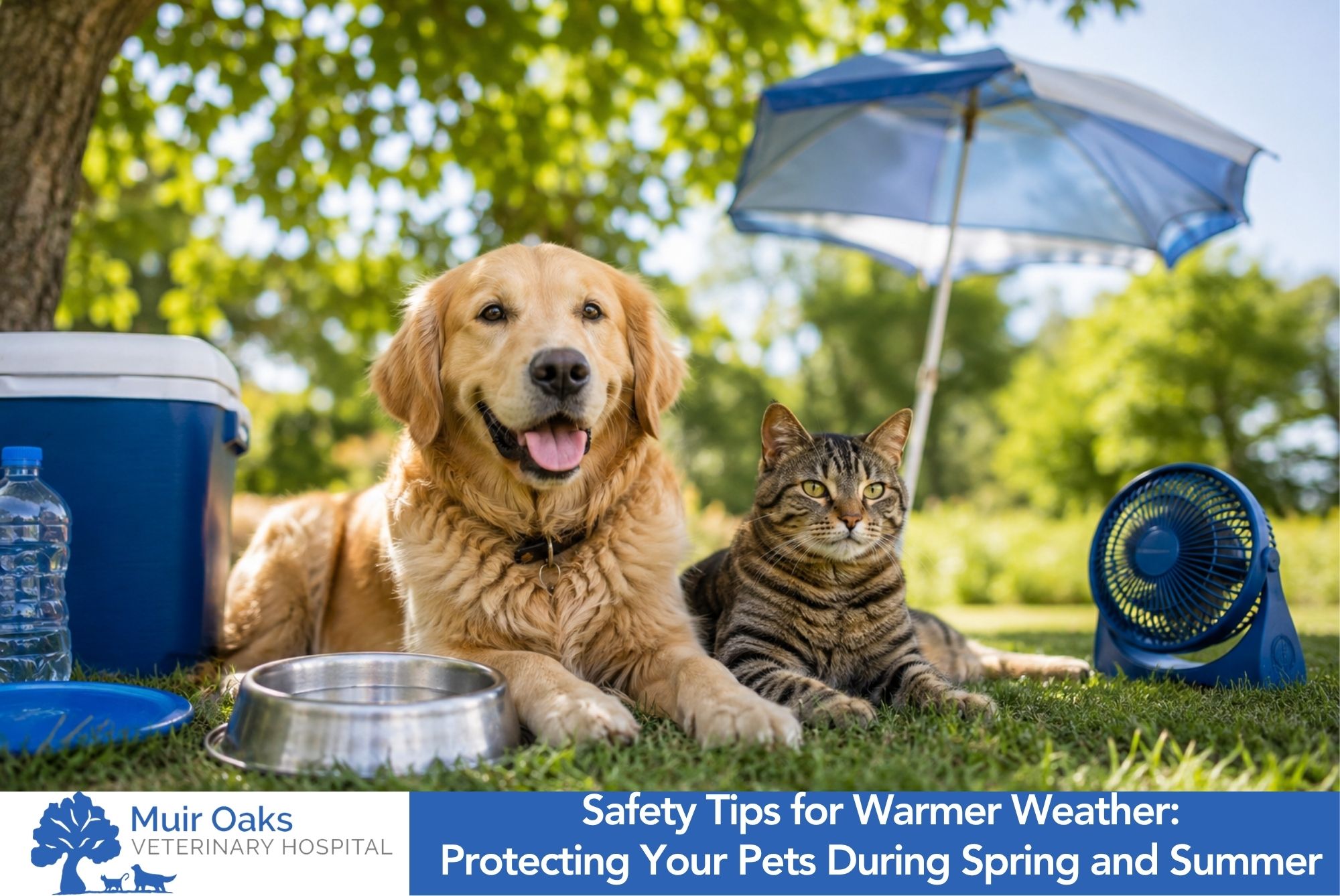
 As temperatures rise and sunny days become more frequent, pet owners are spending more time outdoors with their furry companions. While warmer weather brings opportunities for walks, hikes, beach trips, and backyard fun, it also introduces seasonal hazards that can affect your pet’s health and safety. At Muir Oaks Veterinary Hospital, we want to help you keep your pets safe, healthy, and comfortable all season long.
From heat exhaustion and dehydration to parasites and toxic plants, understanding warm-weather risks can make all the difference. Here’s what every pet owner should know to help their dogs and cats enjoy the season safely.
Keep Pets Cool and Hydrated
One of the most important warm-weather safety tips is preventing overheating. Pets can become overheated much faster than humans, especially brachycephalic (flat-faced) breeds like Bulldogs, Pugs, Persian cats, and Boston Terriers.
Signs of Overheating in Pets
Watch for these symptoms of heat stress or heatstroke:
- Excessive panting
- Drooling
- Lethargy or weakness
- Vomiting
- Bright red gums
- Rapid heartbeat
- Difficulty breathing
- Collapse
Heatstroke is a medical emergency and can become life-threatening quickly.
Tips to Prevent Heat Exhaustion
- Always provide fresh, cool water.
- Avoid walks during the hottest parts of the day (typically 10 a.m. to 4 p.m.).
- Stick to shaded areas when outdoors.
- Never leave pets unattended in a parked car — even for a few minutes.
- Use cooling mats, fans, or kiddie pools for outdoor pets.
- Limit intense exercise on hot days.
Protect Your Pet’s Paws
Hot pavement, asphalt, and sand can burn sensitive paw pads within seconds. Before heading out, place the back of your hand on the pavement for seven seconds. If it’s too hot for your hand, it’s too hot for your pet’s paws.
Paw Protection Tips
- Walk pets during cooler morning or evening hours.
- Stay on grassy or shaded paths.
- Consider pet booties for extra protection.
- Check paws regularly for burns, cracks, or cuts.
Watch Out for Fleas, Ticks, and Mosquitoes
Warmer temperatures mean parasite season is in full swing. Fleas, ticks, and mosquitoes can transmit serious illnesses to both pets and people.
Common Warm-Weather Parasite Risks
- Fleas: Cause itching, allergies, and skin infections.
- Ticks: Can spread Lyme disease and other tick-borne illnesses.
- Mosquitoes: Carry heartworm disease, which can be fatal.
How to Protect Your Pet
- Keep your pet on veterinarian-approved flea, tick, and heartworm prevention year-round.
- Check your pet for ticks after outdoor activities.
- Maintain your yard by trimming grass and removing standing water.
If you’re unsure which parasite prevention products are best for your pet, our veterinary team can help.
Practice Water Safety
Many dogs love swimming, but water activities come with their own risks.
Water Safety Tips for Pets
- Never force a pet into the water.
- Use a pet life jacket when boating or near deep water.
- Rinse pets off after swimming to remove chlorine, salt, or bacteria.
- Prevent pets from drinking pool, lake, or ocean water.
- Supervise pets around water at all times.
Not all dogs are natural swimmers, so gradual introductions to water are important.
Be Careful with Summer Foods and Plants
Backyard barbecues and gardening are popular during warmer months, but some foods and plants can be toxic to pets.
Foods to Avoid
- Grapes and raisins
- Onions and garlic
- Chocolate
- Alcohol
- Xylitol (found in sugar-free products)
- Corn cobs
- Fatty table scraps
Toxic Plants Common in Spring and Summer
- Lilies
- Sago palms
- Oleander
- Azaleas
- Tulips
If you suspect your pet has ingested something toxic, contact your veterinarian immediately.
Keep Identification Updated
Warm weather often means more outdoor adventures, vacations, and open doors — all of which increase the risk of pets getting lost.
Important Safety Measures
- Ensure your pet wears an ID tag with current contact information.
- Keep microchip registration updated.
- Use secure leashes and harnesses during walks and outings.
Microchipping greatly improves the chances of reuniting lost pets with their families.
Schedule a Seasonal Wellness Exam
Routine veterinary care plays a key role in keeping pets healthy year-round. A wellness exam can help detect early signs of illness, update vaccinations, and ensure your pet is protected against seasonal risks.
At Muir Oaks Veterinary Hospital, we provide comprehensive preventive care tailored to your pet’s needs, helping your furry family members stay happy and healthy through every season.
Frequently Asked Questions About Warm Weather Pet Safety
How hot is too hot for dogs?
Generally, temperatures above 85°F can become dangerous, especially for senior pets, puppies, overweight pets, and flat-faced breeds. Humidity can also increase the risk of overheating.
Can pets get sunburned?
Yes. Light-colored pets, pets with thin fur, and hairless breeds are especially vulnerable to sunburn. Pet-safe sunscreen may help protect exposed areas.
What should I do if my pet overheats?
Move your pet to a cool area immediately, provide cool (not ice-cold) water, and contact your veterinarian right away. Do not use ice baths, as they can cause shock.
Are outdoor cats at risk during warmer weather?
Yes. Outdoor cats can experience dehydration, parasite exposure, heat exhaustion, and injuries. Ensure they have shade, water, and regular veterinary care.
Do indoor pets still need flea and heartworm prevention?
Absolutely. Fleas and mosquitoes can easily enter homes, putting indoor pets at risk for infestations and heartworm disease.
How can I keep my dog active safely during summer?
Choose cooler times of day for exercise, provide plenty of water breaks, and avoid overexertion. Indoor enrichment activities can also help on extremely hot days.
Is it safe to shave my dog in the summer?
Not always. A pet’s coat can actually help regulate body temperature and protect against sunburn. Consult your veterinarian or groomer before shaving your pet.
Why is standing water dangerous for pets?
Standing water can contain harmful bacteria, parasites, or toxic algae blooms that can make pets seriously ill.
Contact Muir Oaks Veterinary Hospital
Muir Oaks Veterinary Hospital
1180 Muir Rd.
Martinez, CA 94553
Call or Text Us: (925) 372-9200
After Hours Emergency: Sage Veterinary Center: (925) 627-7243
Website: muiroaksvet.com
Book An Appointment: https://muiroaksvet.com/appointment/