

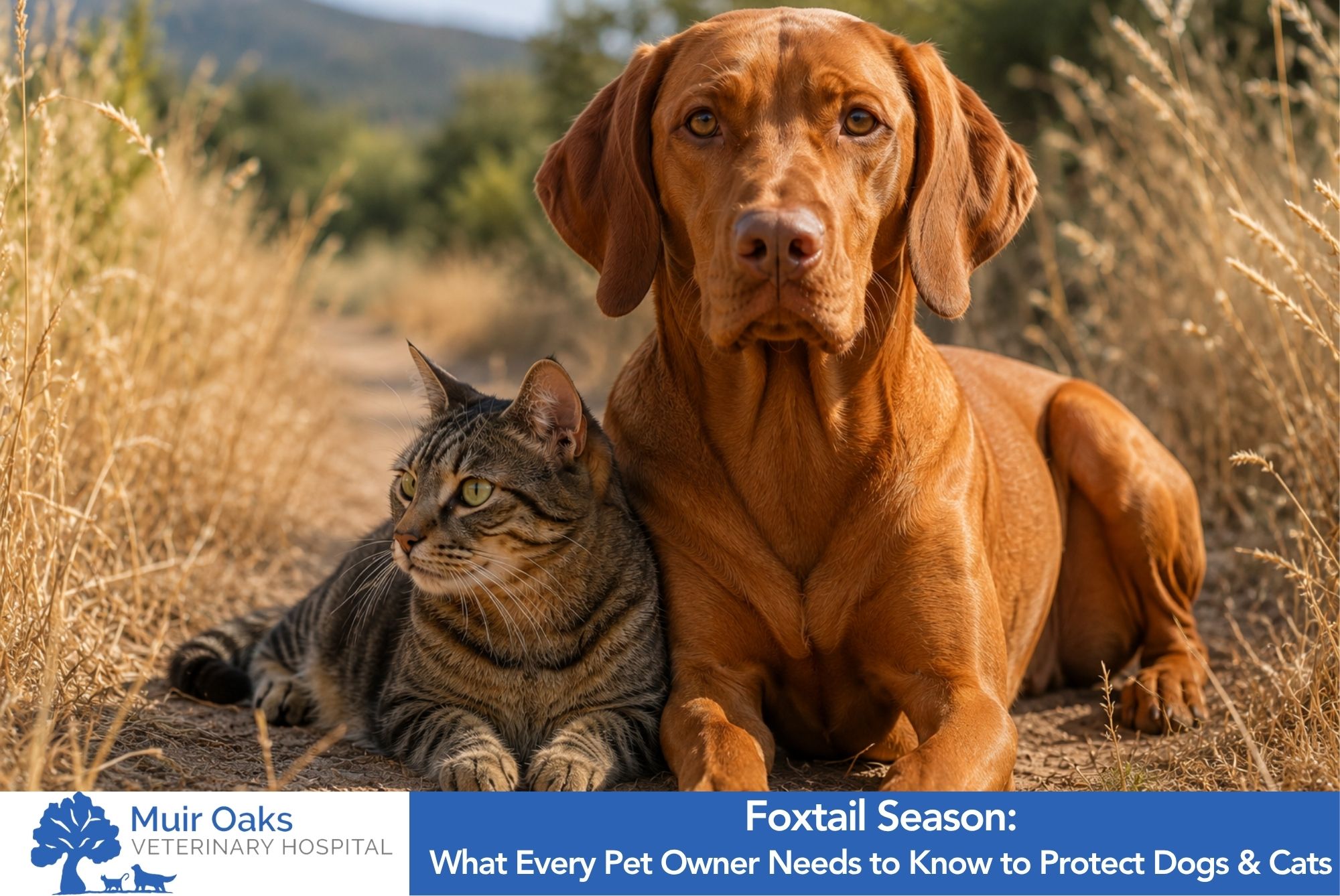
 As the weather warms up in California, pet owners begin spending more time outdoors with their dogs and cats. While hiking trails, parks, grassy fields, and backyard adventures can be enjoyable for pets and families alike, there is one hidden seasonal danger many owners overlook: foxtails.
Foxtails may look harmless, but these invasive grass seed awns can cause serious and even life-threatening health problems for pets. Understanding the risks, symptoms, prevention tips, and treatment options can help keep your furry family members safe during foxtail season.
At Muir Oaks Veterinary Hospital, we want pet owners throughout Martinez, CA, and surrounding communities to recognize the dangers of foxtails and know when to seek veterinary care.
What Are Foxtails?
Foxtails are grass-like weeds with barbed seed heads that become dry and brittle during late spring, summer, and early fall. The pointed seeds are designed by nature to burrow into the soil, but unfortunately, they can also burrow into a pet’s skin, ears, nose, eyes, paws, and even internal organs.
Because foxtails have sharp, backward-facing barbs, they continue moving in one direction once attached to an animal. Unlike other plant debris, foxtails do not naturally work themselves out of the body.
Why Are Foxtails Dangerous for Pets?
Foxtails can attach to your pet during walks, hikes, backyard playtime, or even quick potty breaks in grassy areas. Once embedded, they can migrate deeper into tissues and cause:
- Pain and irritation
- Infection
- Abscesses
- Swelling
- Ear damage
- Eye injuries
- Respiratory issues
- Internal organ damage in severe cases
Without prompt treatment, a small foxtail problem can quickly become a serious medical emergency.
Common Areas Where Foxtails Become Embedded
Ears
Foxtails frequently enter a dog’s ear canal, causing intense discomfort and infection.
Signs may include:
- Head shaking
- Pawing at the ears
- Crying or whining
- Ear redness
- Bad odor from the ear
- Loss of balance
Nose
Dogs that sniff around grassy areas are especially vulnerable.
Symptoms include:
- Sudden sneezing
- Violent sneezing fits
- Nasal discharge
- Pawing at the nose
- Nosebleeds
Eyes
Foxtails can lodge beneath eyelids or scratch the eye surface.
Watch for:
- Squinting
- Excessive tearing
- Eye redness
- Swelling
- Pawing at the face
Paws
Foxtails often become trapped between toes.
Signs include:
- Limping
- Excessive licking
- Swelling between toes
- Drainage or sores
Skin
Foxtails can penetrate almost anywhere on the body.
Symptoms may include:
- Swollen lumps
- Draining tracts
- Tender areas
- Persistent licking
Can Cats Be Affected by Foxtails?
Yes. Although dogs are more commonly affected due to their outdoor activity levels, cats can also suffer foxtail injuries. Outdoor cats are particularly at risk when exploring overgrown areas or hiding in tall grass.
Because cats are often very good at hiding pain, subtle changes such as decreased appetite, lethargy, sneezing, or limping should never be ignored.
When Is Foxtail Season?
In Northern California, foxtail season typically begins in late spring and continues through summer and early fall. Dry conditions make foxtails especially hazardous because the seed heads become brittle and easily detach from the plant.
Areas commonly containing foxtails include:
- Hiking trails
- Open fields
- Roadsides
- Vacant lots
- Parks
- Dry grassy areas
- Overgrown yards
How Veterinarians Remove Foxtails
Treatment depends on where the foxtail is located and how deeply it has migrated.
Veterinary treatment may include:
- Physical examination
- Sedation for safe removal
- Ear examination with an otoscope
- Flushing of affected areas
- Minor surgical procedures
- Antibiotics or pain medication
- Imaging such as X-rays or ultrasound in severe cases
Prompt veterinary care greatly improves outcomes and helps prevent complications.
How to Protect Your Pet from Foxtails
Avoid High-Risk Areas
Keep pets away from dry grassy fields and overgrown vegetation during foxtail season whenever possible.
Inspect Your Pet After Outdoor Activities
After walks or hikes:
- Check paws and between toes
- Inspect ears
- Look around eyes
- Brush through fur thoroughly
Keep Fur Trimmed
Long-haired dogs may benefit from trimming fur around paws, ears, and belly to reduce foxtail attachment.
Maintain Your Yard
Remove foxtail weeds from your property before they dry out and spread seeds.
Seek Veterinary Care Quickly
If you notice any signs of discomfort, swelling, sneezing, limping, or unusual behavior, contact your veterinarian immediately.
Frequently Asked Questions About Foxtails
Are foxtails an emergency?
They can be. A foxtail embedded in the ear, nose, eye, or deep tissue can quickly become serious. Immediate veterinary attention is recommended if you suspect a foxtail injury.
Can foxtails kill a dog?
In severe untreated cases, foxtails can migrate into vital organs or cause dangerous infections. Early treatment significantly reduces the risk of serious complications.
How do I know if my dog has a foxtail in its paw?
Common signs include limping, licking the paw excessively, swelling between the toes, redness, or draining sores.
Can foxtails come out on their own?
Rarely. Because of their barbed shape, foxtails usually continue moving deeper into tissue rather than backing out naturally.
Are certain dog breeds more at risk?
Dogs with long coats, floppy ears, or active outdoor lifestyles may face increased risk, but any dog can be affected.
Can indoor pets get foxtails?
Yes. Foxtails can hitch a ride on clothing, shoes, or other pets and still pose a risk indoors.
What should I do if I suspect my pet has a foxtail?
Avoid trying to remove deeply embedded foxtails yourself. Contact your veterinarian as soon as possible for evaluation and safe removal.
Trust Muir Oaks Veterinary Hospital for Pet Care in Martinez, CA
Foxtails are small, but they can lead to major health issues if left untreated. Awareness, prevention, and early veterinary care are the best ways to protect your pets during foxtail season.
At Muir Oaks Veterinary Hospital, our compassionate veterinary team is here to help keep your pets healthy, comfortable, and safe year-round. If you believe your dog or cat may have encountered a foxtail, do not wait to seek professional care.
Contact Muir Oaks Veterinary Hospital
Muir Oaks Veterinary Hospital
1180 Muir Rd.
Martinez, CA 94553
Call or Text Us: (925) 372-9200
After Hours Emergency: Sage Veterinary Center: (925) 627-7243
Website: muiroaksvet.com
Book An Appointment:
https://muiroaksvet.com/appointment/