
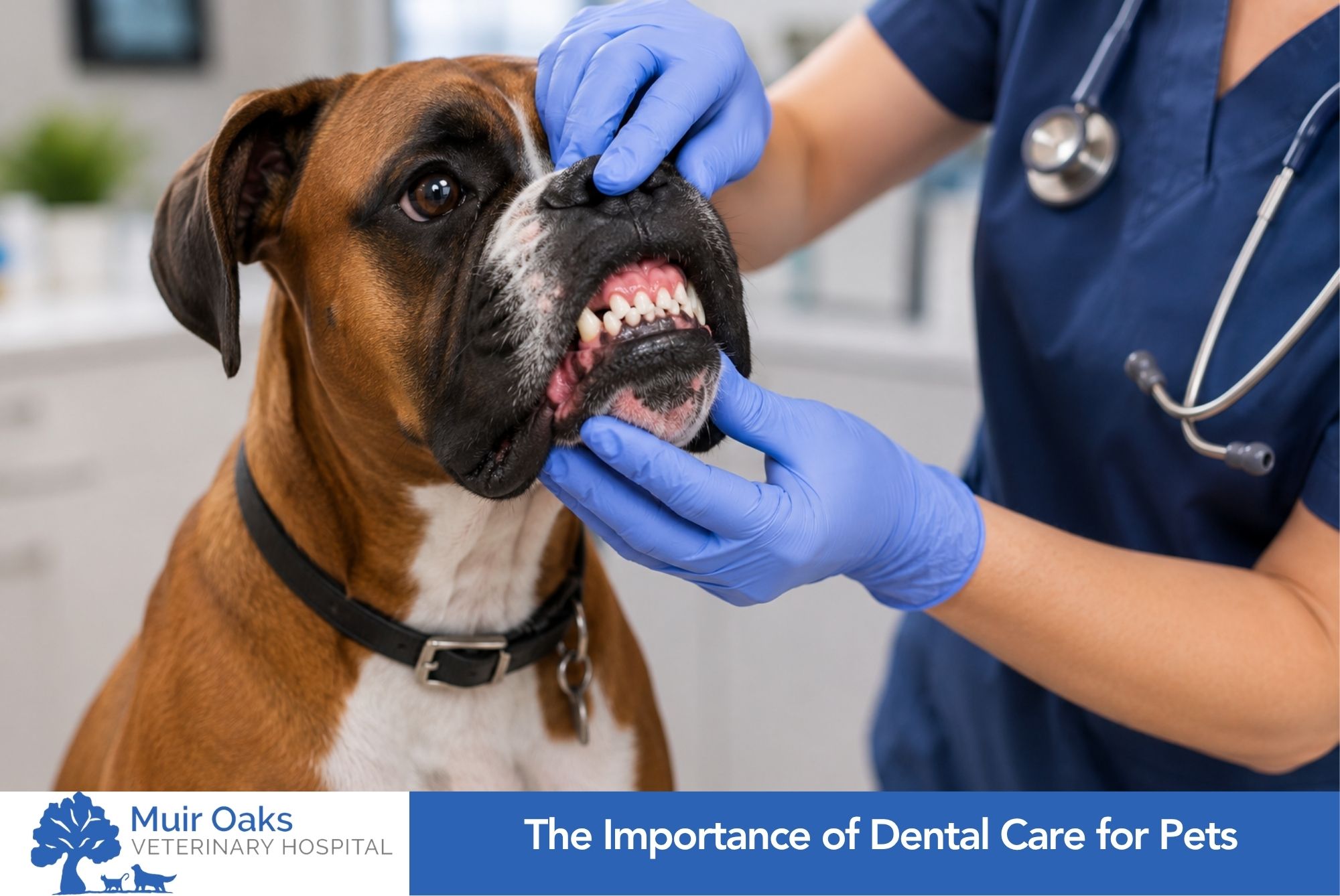
 Your pet’s dental health is just as important as their physical health. Many pet owners are surprised to learn that dental disease is one of the most common health conditions affecting dogs and cats. Without proper oral care, pets can develop painful infections, tooth loss, and even serious health complications that affect the heart, liver, and kidneys. At Muir Oaks Veterinary Hospital, we believe preventative dental care is essential for helping your furry family members live healthier, happier lives.
Why Pet Dental Care Matters
Dental disease often begins quietly. Plaque and tartar build up on your pet’s teeth over time, leading to inflammation of the gums, known as gingivitis. If left untreated, gingivitis can progress into periodontal disease, a painful condition that damages the teeth, gums, and supporting bone structures.
Unfortunately, pets cannot tell us when they are in pain. Many continue eating and behaving normally despite severe dental discomfort. Regular dental checkups and professional cleanings can identify problems early before they become more serious and expensive to treat.
Common Signs of Dental Problems in Pets
Pet owners should watch for these warning signs of dental disease:
- Bad breath
- Yellow or brown tartar buildup
- Red or swollen gums
- Difficulty chewing
- Dropping food while eating
- Excessive drooling
- Pawing at the mouth
- Loose or missing teeth
- Reduced appetite
- Behavioral changes or irritability
If you notice any of these symptoms, it is important to schedule a veterinary dental evaluation as soon as possible.
The Risks of Untreated Dental Disease
Untreated dental disease does more than affect your pet’s mouth. Harmful bacteria from oral infections can enter the bloodstream and impact vital organs, including:
- Heart
- Liver
- Kidneys
- Lungs
Chronic dental pain can also significantly reduce your pet’s quality of life. Early intervention helps prevent long-term complications and keeps your pet comfortable.
Professional Veterinary Dental Cleanings
Professional dental cleanings are one of the best ways to maintain your pet’s oral health. During a veterinary dental procedure, your pet is safely placed under anesthesia so the veterinarian can thoroughly examine and clean the teeth both above and below the gumline.
A professional dental cleaning may include:
- Comprehensive oral examination
- Digital dental X-rays
- Plaque and tartar removal
- Polishing teeth
- Tooth extractions if necessary
- Treatment of infections or gum disease
At Muir Oaks Veterinary Hospital, we prioritize your pet’s comfort and safety while providing high-quality dental care tailored to their specific needs.
At-Home Dental Care for Pets
While professional cleanings are essential, daily home care plays a major role in maintaining healthy teeth and gums.
Tips for Better Pet Dental Health
Brush Your Pet’s Teeth Regularly
Using a pet-safe toothbrush and toothpaste can help reduce plaque buildup and freshen breath.
Provide Dental Chews and Toys
Specially designed dental chews and toys can help clean teeth while satisfying your pet’s natural chewing instincts.
Feed a Dental-Friendly Diet
Certain diets and treats are formulated to support oral health and reduce tartar accumulation.
Schedule Routine Veterinary Exams
Regular wellness exams allow your veterinarian to monitor your pet’s oral health and catch dental problems early.
Dental Care for Dogs and Cats
Both dogs and cats are susceptible to dental disease, though signs may differ slightly between species.
Dogs
Small breed dogs are especially prone to periodontal disease due to crowded teeth. Regular cleanings and at-home care are crucial for preventing painful infections.
Cats
Cats can develop conditions such as tooth resorption and severe gingivitis. Since cats often hide pain well, routine dental evaluations are particularly important.
How Often Should Pets Have Dental Cleanings?
The frequency of dental cleanings depends on your pet’s age, breed, health, and oral condition. Many pets benefit from annual dental cleanings, while some may require more frequent care.
Your veterinarian can recommend the ideal dental care schedule for your pet during their wellness exam.
Frequently Asked Questions About Pet Dental Care
How can I tell if my pet has dental disease?
Common signs include bad breath, swollen gums, tartar buildup, drooling, trouble eating, and loose teeth. However, some pets show very subtle symptoms, making routine veterinary exams essential.
Is bad breath normal for pets?
No. Persistent bad breath is often one of the earliest signs of dental disease or infection.
Are anesthesia-free dental cleanings safe?
Anesthesia-free cleanings do not allow veterinarians to properly clean below the gumline or fully evaluate oral health. Professional dental cleanings performed under anesthesia are considered the safest and most effective option.
How often should I brush my pet’s teeth?
Daily brushing is ideal, but even brushing several times per week can significantly improve oral health.
Can dental disease shorten my pet’s lifespan?
Yes. Severe dental infections can spread bacteria throughout the body and contribute to organ damage if left untreated.
What age should pets start dental care?
Dental care should begin early, ideally during puppyhood or kittenhood, to help pets become comfortable with oral hygiene routines.
Are dental treats enough to keep my pet’s teeth clean?
Dental treats can help reduce plaque buildup, but they should not replace brushing or professional dental cleanings.
What happens during a veterinary dental cleaning?
Your pet receives a full oral exam, dental X-rays if needed, tartar removal, polishing, and treatment for any dental issues identified during the procedure.
Can older pets safely undergo dental cleanings?
In many cases, yes. Your veterinarian will perform pre-anesthetic evaluations and bloodwork to ensure your pet can safely undergo the procedure.
Why are dental X-rays important?
Many dental problems occur below the gumline and cannot be seen during a visual exam alone. Dental X-rays help identify hidden infections, bone loss, and damaged teeth.
Schedule Your Pet’s Dental Appointment Today
Protecting your pet’s dental health is one of the best ways to support their long-term well-being. Regular dental care can prevent pain, improve quality of life, and help your pet stay healthy for years to come.
If your pet is showing signs of dental disease or is due for a professional dental cleaning, the compassionate team at Muir Oaks Veterinary Hospital is here to help.
Contact Muir Oaks Veterinary Hospital
Muir Oaks Veterinary Hospital
1180 Muir Rd.
Martinez, CA 94553
Call or Text Us: (925) 372-9200
After Hours Emergency: Sage Veterinary Center: (925) 627-7243
Website: muiroaksvet.com
Book An Appointment: https://muiroaksvet.com/appointment/